I’m Back…With Geocaching.

It has been a very long time since my last post. Please forgive me, I was on break to take the Texas State Bar Exam. I missed Intellectual Property so much, since it was not even slightly tested on the Exam. However, over my break I encountered many IP issues in my travels.

One topic, to which I was introduced, was Geocaching. When I first heard the term, I thought it was pronounced “geocash,” and I thought it was similar to bitcoin. However, Geocaching is apparently an older concept that widespread internet access. Geocaching is an on-going scavenger hunt, where prizes are hidden and discovered using GPS coordinates.

Now a days, the hunter must register to a website where locations are posted.  Each person that visits a treasure site can take the treasure, sign a continuing log of everyone who visited the site, and then leave behind a treasure for the next hunter. Many people can see a few similarities to this activity and the new Pokemon GO game, however, I was berated for comparing the two. Geocaching is older, unique, more sophisticated, and very touchy about being compared to anything.

However, there are many laws and authorities that people should be aware of when participating in this activity.  Law enforcement have had issues in the past with dangerous activity near the hidden sites. There are inherent dangers involved with geocaching, such as visiting a site on the side of a mountain, or in the middle of a desert, but there are dangers with the regular public sites as well. There are many stories of drugs and other contraband being left at sites, as well as sites made for the purpose of luring in victims for robbery or worse. People should go to sites in groups and during regular hours of the day.

Mostly, law enforcement wants people to be logical and responsible when geocaching. If you are making a site, do so on public property or speak to the owners of the private property. Do not mark the treasure as dangerous, warning or caution, even if you trying to wart off non-hunters, also known as Muggles, for those Harry Potter fans. Label the site, usually a plastic container, as Geocache and give contact instructions with the owner or the container, in case there is an issue and the police require more information.

As for hunters, authorities ask that no one trespasses on private property, and also to carry some identification and evidence of the website and the coordinates given, in case of being stopped at a location. Many of these rules mirror the new videos for safely participating in Pokemon GO. The Geocache websites include safety precautions to consider before beginning your Geocache experience, and encourage safe and entertaining use of these networks.

Happy Hunting!

I’m Back…With Geocaching.

Do Fashion Rights Exist?

Out of all of the different types of protected creativity, fashion has fallen through the cracks more than any other. Copyright, trademark, and patent all have reasons to exclude fashionable creations and ideas. Can designers protect their brain babies?

Copyright.

First, Copyright protects artistic expressions, captured in a tangible medium. Copyright will not protect an expression of a useful item, like a washing machine, microwave, or clothing. Copyright will only protect pictorial, graphic or sculptural elements of fashion, such as a prints, patterns, and textiles.

However, these things can only receive protection if the these elements can be identified separately from the useful elements of the clothing. To prove this separation, one must prove that the artistic elements are physically and conceptually separable. Physically separable means the artistic elements can be removed from the clothing and sold separately, like a pictorial print on a t-shirt, or a floral design that can be reprinted on fabric.

Conceptually separable means that the viewer or audience is typically aware of a separate concept other than just the purpose of clothing, like no one believes a Halloween costume was worn for its useful clothing purposes. A court found that Halloween costumes were separate from the simple clothing elements. Unfortunately for fashion, prom dresses and specific tailorings have failed in attempts to make the same argument. The fifth circuit also found that work uniforms for a casino were not separate from the useful elements of the uniform and not protectable.

Trademark.

Next, Trademark protects things that identify the company behind a product or service. It protects names, phrases, symbols and logos. These things, if misused, could potentially fool a consumer into making a purchase under false information. The only way to protect a fashionable item under trademark is to put the logo on it, but the protection is only for the logo, not the item. For some designers like Gucci, the logo must be printed all over the item, so the item becomes the logo, and copycats could not make the item without duplicating the logo. This almost works, but copiers could just as easily avoid the logo and completely copy the item.

Trade Dress

Trade dress protects the way a company packages and presents their products. This protection is based on the appearance of the items and its packaging will identify the company that provides the product or service. An example of trade dress is like the bottle of a 5 hour energy drink, or box that comes with a happy meal. A company can seek remedies from another that uses a product or service’s specific appearances and packaging to trick customers to making a unwanted purchase.

Like trademark, a company would have to prove that the trade dress identity has acquired secondary meaning. Secondary meaning means the public easily identifies the company by the item or product, like the products popularity contributes to the protection. However, this would provide more protection for the packaging and marketability, than one would get for the actual item.

Patent

Under patent law, a artist can receive a design patent that covers a new, non-obvious ornamental designs on functional items. This protection last 14 years, but typically takes several months at least to register the patent. Most fashion designers would argue that designs are stolen, shared, and fall out of style within a year and could possibly be undesirable by the time the protection is granted.

This long processing system is due to the fact that the Patent Office is very strict on what is accepted and protected. The term “new” means it better not look like another registered patent in the system. The term “non-obvious” means there has to be a sense of creativity, like making a dress out of coins. An example of obvious design would be like zebra print, the idea of printing animal hide colors and designs is an obvious idea, that anyone with an interest in leopard or zebra could do.

Most fashion designers should apply for the design patent, to receive 14 years of protection. The designer will then use the 14 years to establish trademark and trade dress secondary meaning for the greatest protection.

IDPA

In 2012, a bill was introduced to a Senate Committee, which included the Innovative Design Protection Act (IDPA), a.k.a. the Fashion Bill. The IDPA gives 3 years of copyright protection to fashion designs that “(i) are the result of a designer’s own creative endeavor; and (ii) provide a unique, distinguishable, non-trivial and non-utilitarian variation over prior designs for similar types of articles.” Since this bill was introduced, there has been very little lobby or push to revisit it again.

Some say with this new law, more designers will be encouraged to create more now that it can be protected and the exposure can be controlled. Others say that this will significantly hinder fashion, because now infringement will be an issue with true creativity. So which will happen? Will fashion designers make millions now that their rights are protected or will everyone be too busy suing each other to create anything?

Do Fashion Rights Exist?

The Final Frontier….Belongs to Someone

At the end of 2015, a lawsuit was filed by CBS and Paramount against a writer and a production company for a movie infringing upon the copyrights of the Star Trek franchise. The movie is a prequel to the original Star Trek, set 21 years before the first Kirk episode. The movie is titled Axanar and follows a mentor of Kirk who made appearances in the original episodes.

The amazing thing is that this entire production has been funded by crowd-sourcing campaigns, like kickstarter or Go-fund. Through 3 campaigns,the company has collected over a million dollars. The writer and life-long fan said he wanted to show the entertainment world that a studio-quality movie can be made without billions of dollars. He also says that the movie is a love letter to the originals, but are love letters prohibited by copyright law?

In the complaint, CBS/Paramount allege the Axanar movie was directly and unabashedly intended to be derivative of the original works owned by Paramount and CBS. The Companies are claiming direct infringement, contributory infringement and various infringement; and are asking for $150,000 in statutory damages for each Star Trek work that was infringed, reasonable attorney’s fees and costs and an injunction to stop the Axanar group from continuing the film. The claims are against the company, the writer, Alec Peters, and 20 unnamed defendants called Does.

Direct infringement is where there is evidence that an individual intentionally unlawfully copied someone else’s protected work. Contributory infringement is where the individual did not actually commit the unlawful copying but contributed to the infringement. The best example is Napster, where Napster argued they were not copying the music. Technically, their users were doing the actual copying. The court held that Napster was responsible for providing the means and availability of the unlawful copying and could still be charged with infringement.

When I read contributory infringement in the complaint, I thought CBS was trying to sue the group of people donating to the kickstarter. Maybe these Does were only guilty of donating money to a website. This could potentially be ground breaking law, because the crowd-sourcing campaign is a new technology, and has not been pushed through the legal system to work out the legal disputes. Also, “contributing” to a Go-fund, could be found to be contributory infringement, if the funds are used to infringe. I know, this is exciting stuff.

Vicarious infringement is more a baby of employment law. A boss or employer can be vicariously liable for the misdeeds and negligence of their employees. This is based on the policy that the boss should train his workers to avoid risk and obey all laws. So in this setting, CBS is claiming that the Axanar group had the rights and ability to supervise their employees and failed to prevent them from infringing, and should be responsible for the employee’s infringement.

On the Axanar website, the group has a “Captains’s Log” that posts the progress of the film. The last entry is for February, and mentions the CBS/Paramount lawsuit and stopping production until after they file an answer in Federal District Court in California. I assume that the halt on production means that CBS got a preliminary injunction, which means stop everything now, until the case is decided.

If CBS and Paramount have their way, they will have a permanent injunction against Axanar and will collect money to pay them for their  loss and harm. I believe the true loss and harm is the fact that a fan wrote a love letter to a big company and a franchise, and the big company sued them for it.


The Final Frontier….Belongs to Someone

The Diary of Otto Frank.

Recently, many articles have been written about The Diary of Anne Frank, a story from the perspective of a young, dutch girl who grew up in hiding from the Naxis force in Germany during WWII. Anne Frank, the “author” of her diary, died in 1945, which means the book should fall into public domain at the end of 2015.

However, the Anne Frank Fund, the “owner” of the copyright, is disputing its length of protection. The Anne Frank Fund (AFF) is a charitable organization created by Anne’s father, Otto Frank. Otto made the organization the universal heir of him and his daughter, so the org “owns” every copyrightable thing created by the pair.

Originally, the copyright argument was that Otto, the father, was a co-writer of the story, because he claimed to have written the prologue and epilogue and contributed to the story. As a joint writer, the protection clock would start counting down 70 years from the death of the last living author. Otto died in 1980, so his protection should continue until 2050. The problem is that in order to be a joint work you must plan to be a joint work from the beginning of the creation. I highly doubt that Otto and Anne decided to write her diary together as co-authors, fully aware of its future popularity as a novel and the necessary intellectual property protections.

Another route around the public domain, is to argue that the original work by Anne Frank has been improved and transformed into a new work or compilation. A compilation is like a “Best Of” album, that can be resold as a separate work. AFF argues that Otto created a Best Of version of the book, and maintains copyright protection for his new work. A compilation would have been created later and the Diaries would have a longer protection.

On the AFF website, there is answers to questions about the copyright, such as “Why is AFF the copyright holder of the Diaries?”, “Who wrote the Diary of Anne Frank?”, and my favorite, “How can I ensure that I am not infringing the Diaries’ rights?”. They say that Anne was the sole author of the Diaries, and there are many versions that will be protected past 2015. The website has links that lead you to other articles that confirm the extension of protection, but based on when the manuscripts were published.

So they dropped the dad’s argument and decided that the length of protection should be based on when the Diary was published to the masses, not the death of the author.  Since the works were published in 1986 after the death of the author, Dutch law grants 50 years of protection, ending in 2037. This Dutch Law will likely be increased to 70 years to match up with other countries after the TPPA is passed.

This policy of calculating from the date of publication or creation was created to cover works where the death of the artist was not definite or maybe the work was not published and marketed until after the death of the artist. In U.S. law, the author gets 70 years of protection after death,  95 from the date of publication, or 120 from the date of creation. This gave the right holders every chance to effectively proof with some certainty the actual date the clock begins to tick. It’s not meant to be a system to shop for the longest protection possible, or to avoid public domain like a disease.

The AFF website makes sure to inform the reader that just because they will sue you, does not mean you cannot buy rights to the book or its many versions. I wonder if Anne ever thought that her daily, private notes would be read by millions, some in classrooms and libraries. However, I’m almost sure she would not have intended her inspirational story to require a license and fee. Once again, statute has crippled the Public Domain.

The Diary of Otto Frank.

Mardi Gras has IP too!

I just returned back from New Orleans, where I was able to celebrate the holiday with friends and family. It was a very nice vacation, but still, was not lacking in intellectual property issues.

First, the is a group of performers called the Mardi Gras Indians, who construct these elaborate suits, crowns and costumes.  Many of which are so connected to the groups history and culture that you can identify the group by the craft of the costume.

These groups are trying to copyright their costumes are works protected by the Copyright Act. However, most judges would view these costumes as clothing, and unfortunately for fashion fans, clothing in itself is not copyrightable. The legal system has decided many times in many different settings, that clothing is simply a useful item and not a work of art.

Of course, many would argue that clothing has evolved so much throughout history, and so much fashion is now made for aesthetics and is not useful in any sense other than beauty and art. At this point, I believe that the law agrees that fashion is art, but the real fear is the onslaught of copyright registration and disputes that will crash into the legal system once clothing can be protected.

Another issue I spotted actually happened a while ago in the 2000s, involving two bars in the French Quarter. Both bars were selling an infamous drink on Bourbon Street, called the Hand Grenade. You can see the original bar’s advertising at their website. http://tropicalisle.com/ This drink had a specific cocktail, a sweet, melon-flavored Hurricane, and had the same container, a bulbous bottom with a smiling face, and a long top that flares at the top, also called a Yard glass.

The court found that the second company had infringed the intellectual rights of the first handgrenade, and tropical Isle maintains the Hand grenade today. They are pretty tasty, if you like tons of sugar and hangovers.

I was also curious about the floats and whether they can be protected. I have not found any information on them, but I will keep looking.


Mardi Gras has IP too!

Leeland St. Artwork 

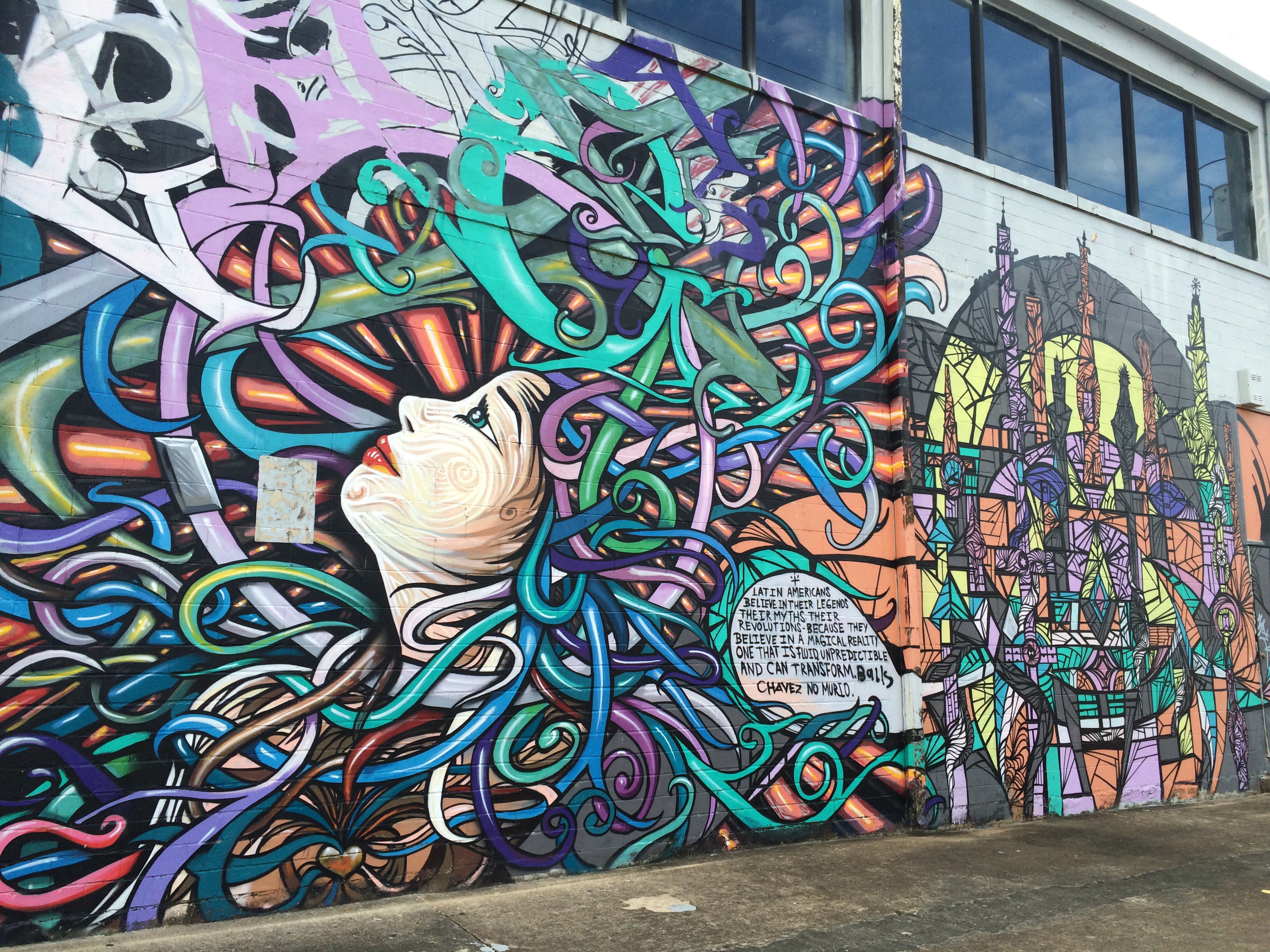
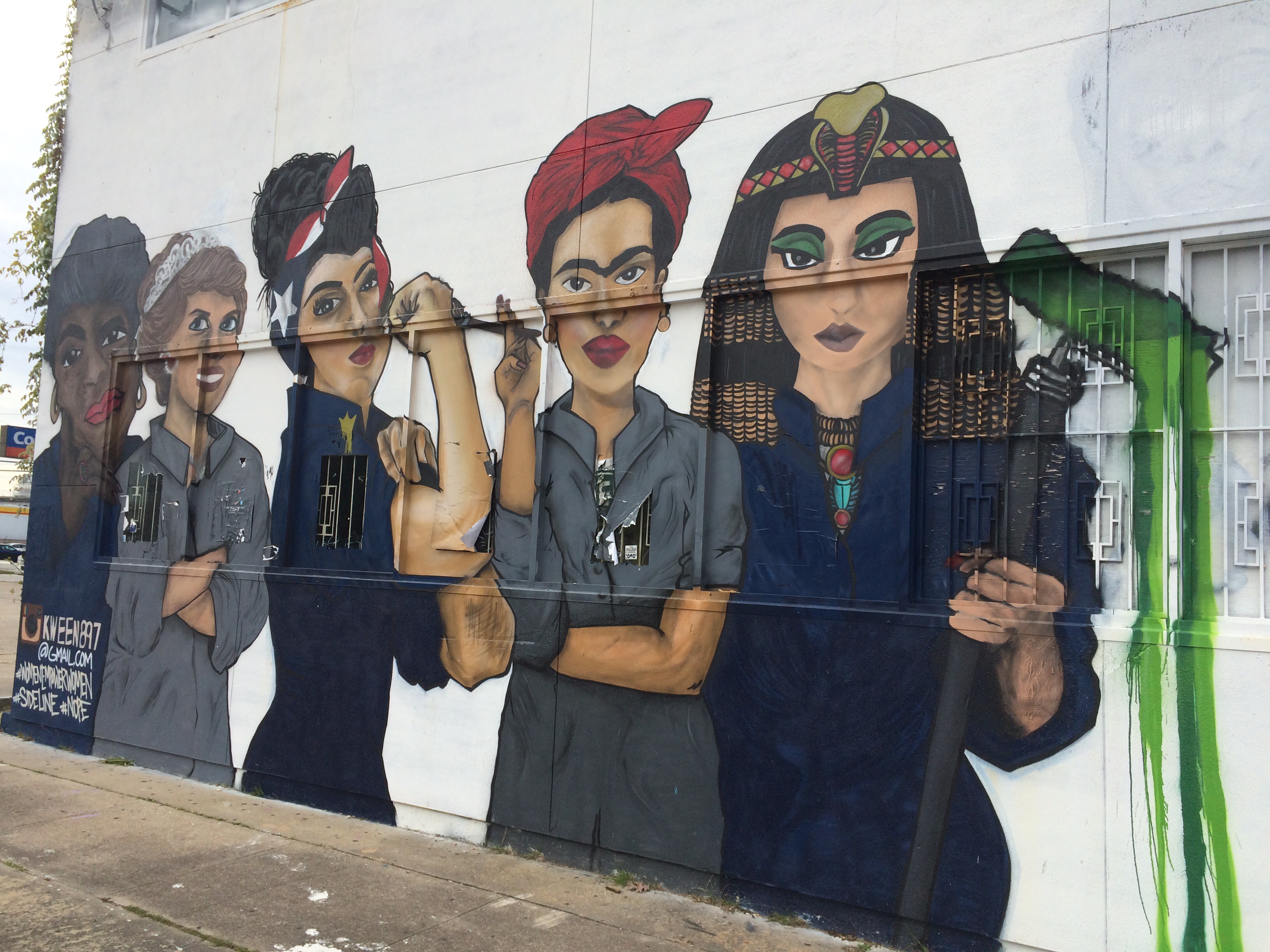
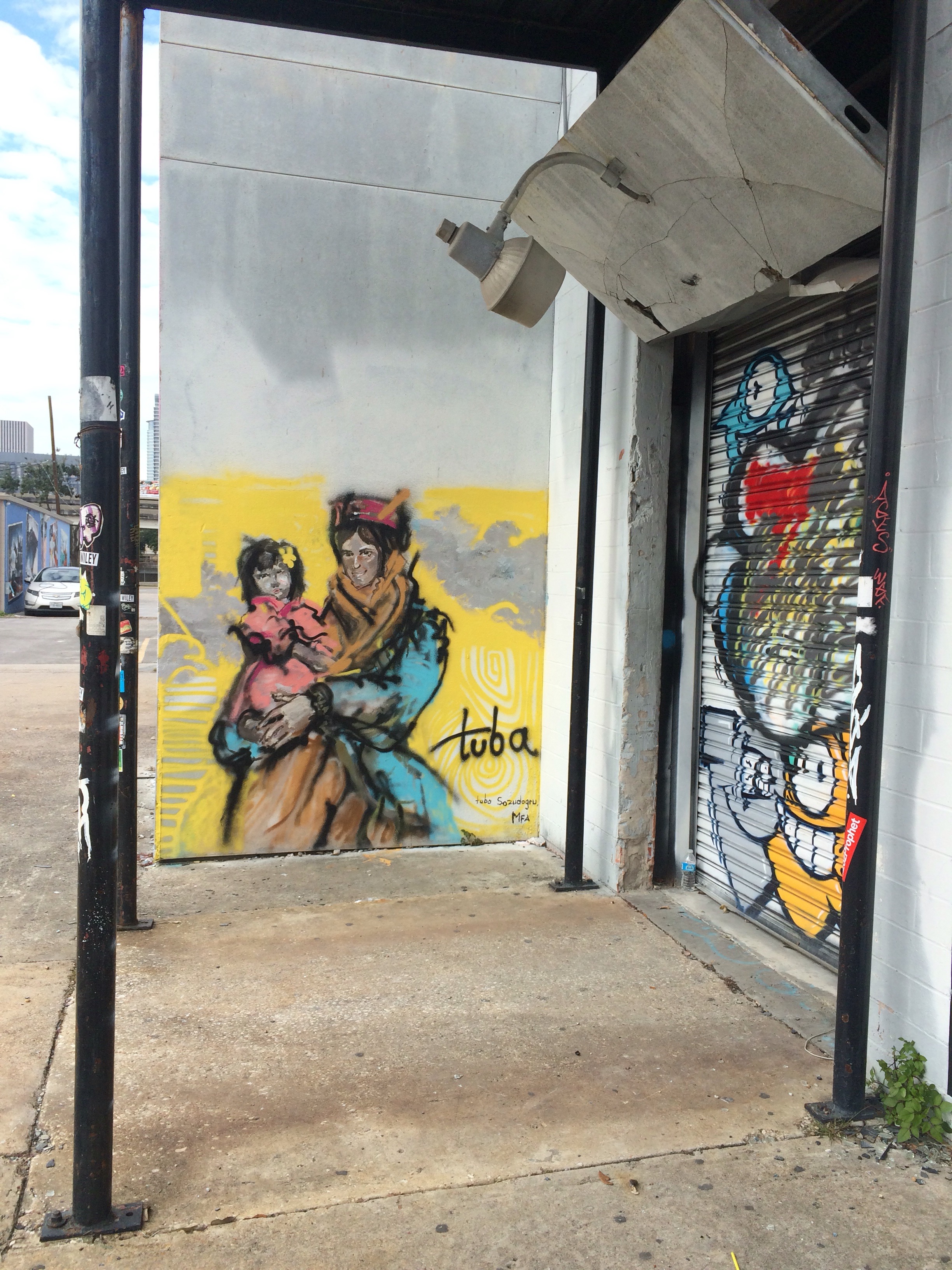
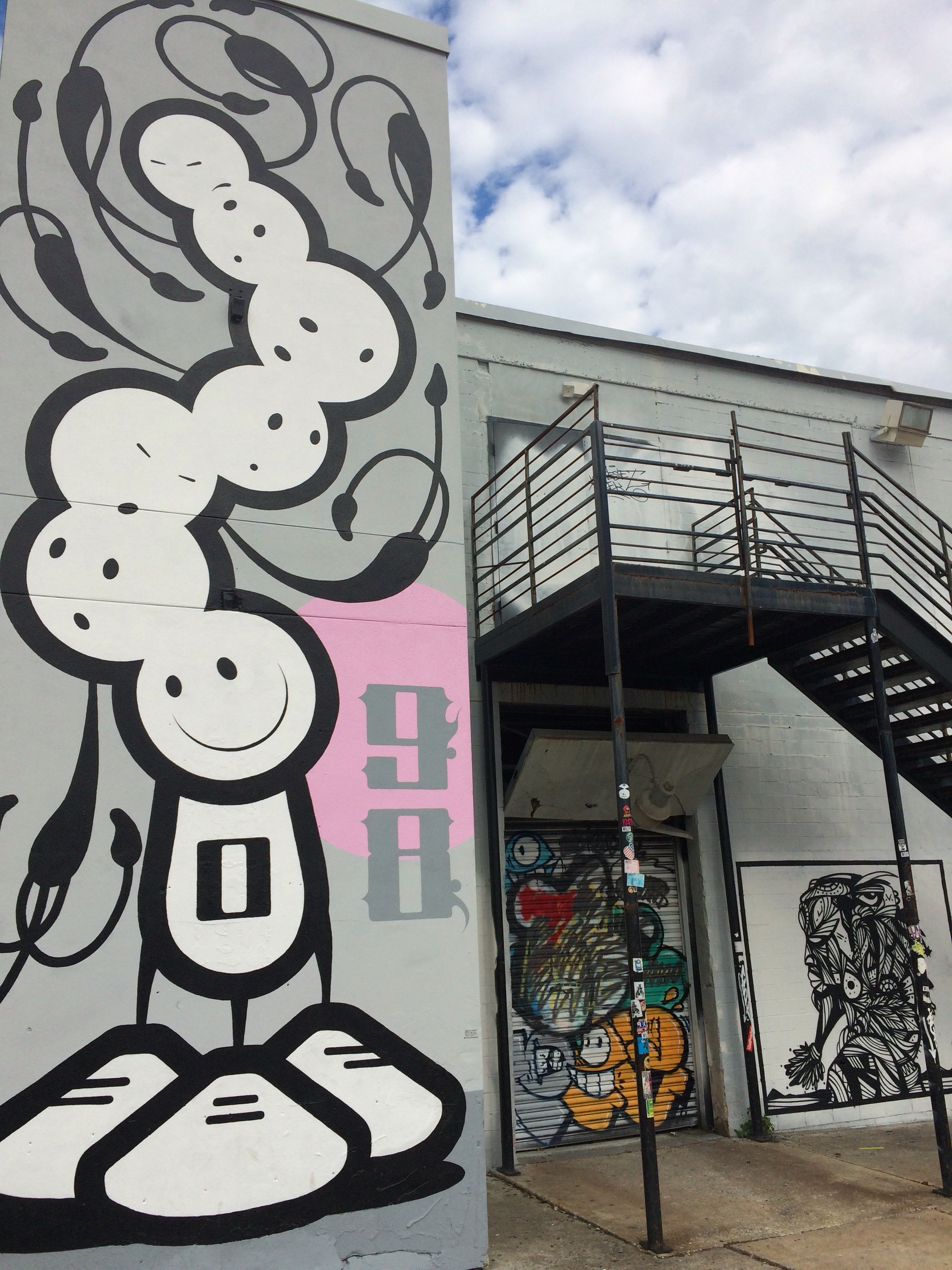
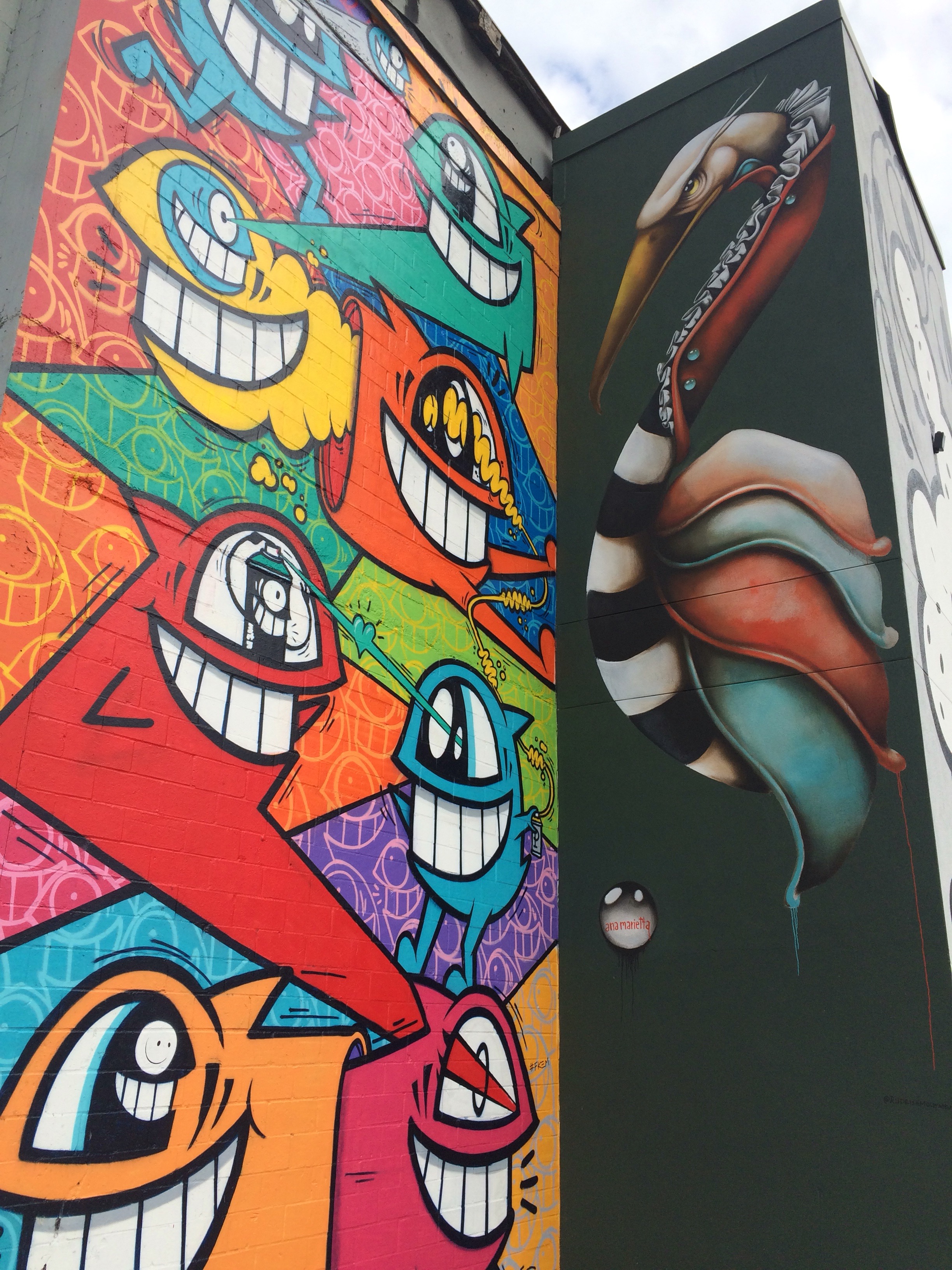
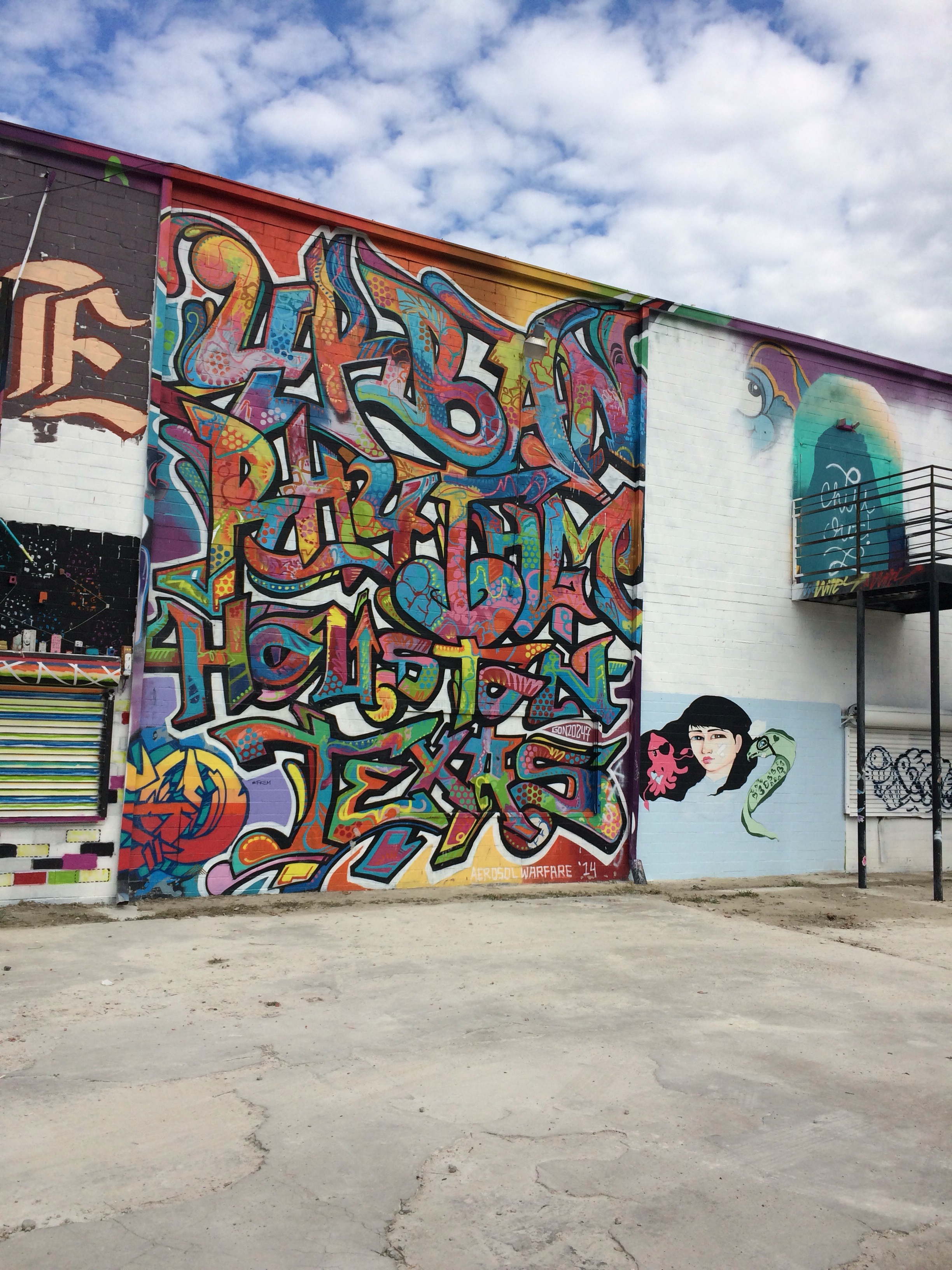
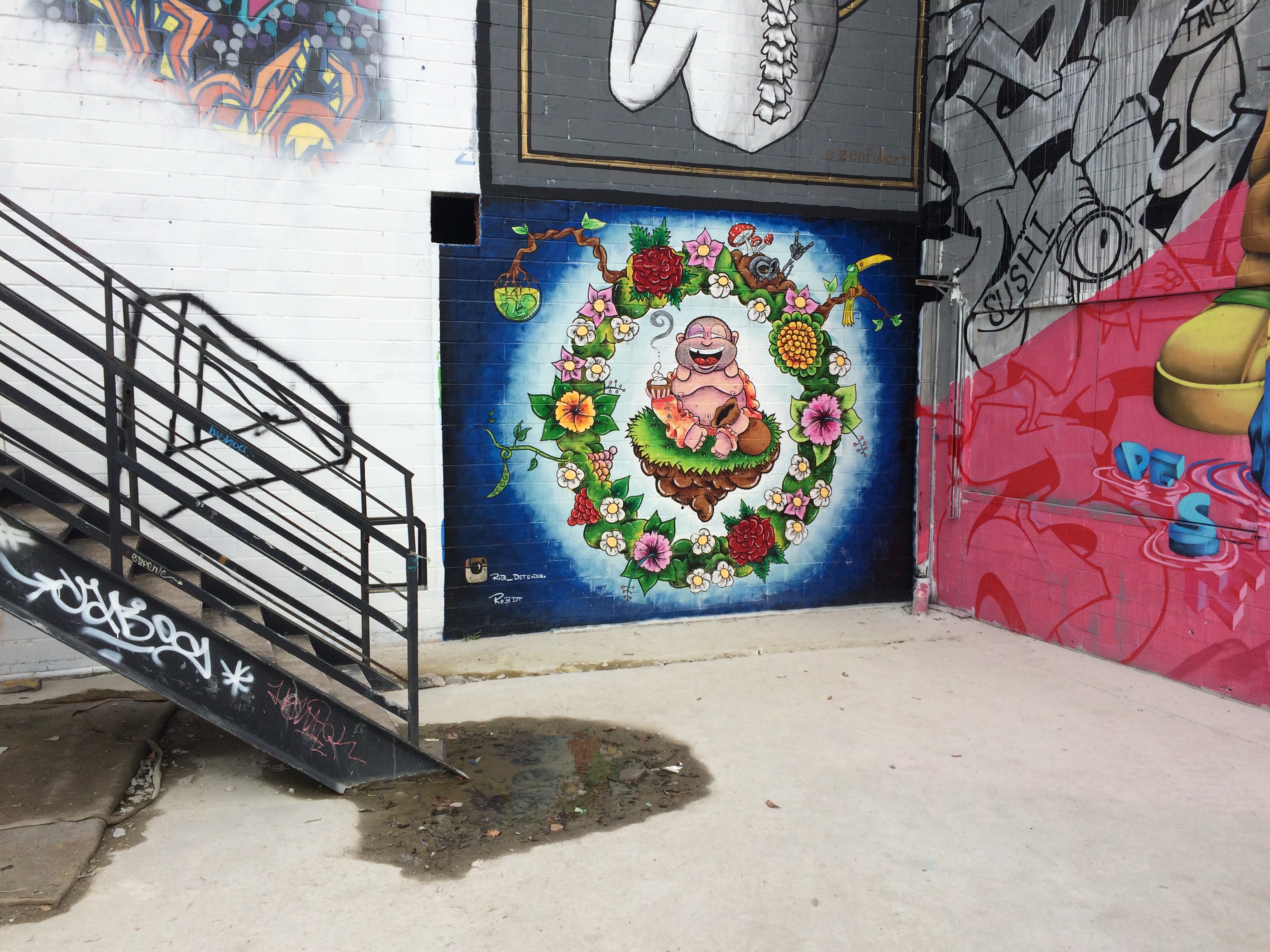
Here is some art work I found in the downtown area. I am not sure of all the artists for this one building, but one is gonzo247 from  a gallery called Aerosol Warfare. He is a local from Houston, and you can check out more of his work at http://www.aerosolwarfare.com/about-gonzo247/ . He recently had an article written about his plan for a graffiti museum in the Houston Press, http://www.houstonpress.com/arts/gonzo247-is-the-reason-houston-will-have-the-first-graffiti-museum-in-the-country-7822659. You can also look gonzo247 up on Facebook and Twitter. Gonzo247’s main piece at this location is the second picture with Houston in the center of many bright colors with the city-scape above the letters. He also painted the croutching cowboy from pictures ten and thirteen.  


Leeland St. Artwork 

In the Beginning…

Today I wanted to talk about the very first government regulation on Copyright. This was known as the Statute of Anne, the Copyright Act of 1709, or the long version, An Act for the Encouragement of Learning, by Vesting the Copies of Printed Books in the Authors or Purchasers of such Copies, during the Times therein mentioned. I really like the long title, because it reiterates the ultimate purpose of protecting copyright, which is Encouraging Learning.

Before the Statute of Anne, the government had no regulation on copyright protection. In 1662, a law was passed to regulate copying printed materials, and it was called the Licensing of the Press Act. This was not a government regulation, it was a means for a private Company to enforce any restrictions against unlawful copiers. The Company was a guild of printers called the Stationer’s Company, who had the exclusive right to print and to censor any infringing or stolen printed works.

Many writers felt as if the Stationer’s Company had stolen their right to protect their works. If the Company was not interested in protecting your work or did not agree that the copying was infringing, then the Company would not enforce the protection. Authors hated this law and actively tried to repeal it and avoid its renewal.

Then in 1710, while Anne was Queen of England, Parliament passed an act that place the right of protection in the author. The preamble of the Act states that some writers, printers, booksellers have taken the liberty of copying someone’s writings without their consent, to their detriment, which causes the ruin of the author and their families. It also states that the object of the act is to stop such practices for the future, and to encourage learned men to compose and write more useful books and literature.

The Statute of Anne provided an author with a 14 year period of protection, which only the author could renew for another 14 year period. This term protection would expire after the second protection period or if the author failed to renew the first and the work would fall into public domain. This seems like a very weak protection compare to today’s system that protects the work for the life of the author, plus 70 years.

However, today’s system of “life plus 70” is made to protect the author for their life and to protect their heirs and inheritance receivers. Let’s be honest though, 70 years after death is enough time to maintain the protection passed the author’s grandchildren. In my opinion, because of this over-protection after the author’s death, the U.S. has a very weak public domain system.

Many works have copyright protection, even though there is no author or heir to enforce the protection and claim infringement against a copier. This is called an orphan work, which is exactly what it sounds like, there is no guardian to protect the copyright. These types of work should be public domain, however, because of the system, these works are still considered infringing even though no one makes the claim against the copier.

The current system does not automatically place things in public domain unless the copyright expires decades after the author did.  Usually, there is an argument and a trial to determine whether the infringer took from a protected work or whether the work could be public domain. Which means without a complaint, nothing is done.

Back to the Statute of Anne in 1710, works were automatically placed in public domain at the end of the term. Authors could choose to renew and could have 14-28 years of protection.  With the survival rate of the time, was probably very close to life plus a little heir protection. The author had protection for 14 years and could renew it before their death.  The protection would continue for 14 more years, which is enough time to maintain a small living for the author’s children, at least until they made their own works.

This means that orphan works that have no one to enforce its protection, would only last one term and then fall into public domain without a trial or legal act. Public domain should be the only reason to protect creativity. To Encourage Learning means to protect the ones who discover and create, so they will discover and create more, then give their benefits to the public.

In the Beginning…

Is Parody a Compliment?

Today I would like to talk about the exceptions given to an artist who imitates another work protected under copyright. This is called parody, and I am sure many readers have encountered this in entertainment such as SNL, Mad TV, Mad Magazine, and Weird Al.

A parody is a near-exact imitation of the original, so by definition it should be infringing. However, the exception given to parody goes back to the Nation’s original reason for protecting intellectual property. In order to encourage Americans to provide our Nation with the best-of-the-best products, art, culture and technology, we must protect their creations as private property so that these talented people can sustain themselves financially, and continue to create better and better things for our country.

The government wants to protect your creation, but only so everyone can have and use it to better their lives. In pursuit of this goal, we want to protect people who choose to critique these works, find flaws, and determine which would be best. When it comes to entertainment, this is done by social commentary, or for the sake of humor, parody.

Many people would not think that parody has an important role in society. However, many of those same people would not be updated on current events unless a comedian or entertainer that they follow, mentioned the event. The fact that a parody is intentionally bringing public attention to the original work is another strong reason to allow parody in law. How can you argue that the parody has taken publicity and interest away from you, when many people would not know of the original without the joke, skit, or meme?

Because of this reasoning, the law requires certain things to find that a parody did not infringe the original song. The parody must relate back to the original as much as possible. This means proving the opposite of what you would prove for fair use.  Fair use means the infringer used so little and the song is so different that it could not be harmful to the first artist’s business.

However, the parody work must look almost identical to the original work. If a court does not find enough elements that are identical to the original, then the court may determine that the second work was making an independent work and infringed on the original. Many have made mistakes with this part of the law. Some have gone into court thinking this will be an easy case to win, only to find out that their silly song written over Johnny Cash music, is not a parody because it had nothing to do with Johnny Cash or the theme of the original song. The court said the second work was not making comments on the original artist or his song, but trying to use the original work to establish an independent creation.

If the songs are similar enough and the sole purpose of the parody was to critique or comment on the original, then the court can find that the parody only boosted the original work’s publicity and was not harmful to the first artist. Courts treat a parody as a compliment to the original work, that cannot actually compete or harm the business of the original.

Many cases have come from this type of law. I know Weird Al kills at this law, and has won many cases under parody law. I remember when Coolio sued him for Amish Paradise, a spoof of Gangster’s Paradise. I really think Coolio did not have a case, but he did not want to be the butt of any joke. He made comments during and after the case about his song’s message about inner-city violence, but the song does seem to idolize the lifestyle, rather than discourage it. I think Coolio just wanted to stay Cool.

Is Parody a Compliment?

Too Popular? Loosing a Trademark

Recently, I wrote about some trademark issues and today I would like to talk about how a trademark can lose its protection by becoming too popular. As I mentioned before, a trademark has its ultimate level of protection when it is filed with the US Patent and Trademark Office. So the easiest way for a trademark to lose protection is that the registration was abandoned or simply never refiled. This typically happens with small businesses that have a greater chance of changing, growing and shutting down.

By saying a company has lost their trademark protection is to say that competitors can use the mark, word, phrase or logo without infringing the rights of the first company. Once they lose their ability to claim against another for improper use, there is no trademark, only a publicly used identifier.

However, in some cases, the fact that a larger business has a product that has become so well-known, causes the big company to lose their protect. The policy behind this is that the USPTO is reluctant to protect a trademark or name that identifies the product and not the business. This is called trademark erosion, genericide, or a trademark becoming generic.

Examples of these type of trademarks are Aspirin, Dry Ice, Escalator, Thermos, Trampoline, Cellophane, and Videotape. These names became so popular that they described their product and not their company or creator. A thermos was an insulated beverage container, and was not considered as the company that originally made this product. Similarly, aspirin was shown to be considered a anti-inflammatory, sold over the counter, not a company that produced medicine. Zipper was originally the name of the owner of the company that created a device that joined two pieces of fabric by using an interlocking set of teeth, but soon the name only described the product and not the company or the owner.

This has happened to many companies and many have fought the process of their trademark becoming generic. I can remember see Xerox ads in magazines instructing customers to refer to using their machines as making a photocopy with a Xerox machine, not making a Xerox. Do not ask for a Xerox of a document, but ask for a copy using the Xerox machine.  Google has spent countless dollars combating the use of the phrase “googling it”, for the same reason.

Some companies include a description of the product after the name. Kleenex became Kleenex facial tissues, and Velcro became Velcro fasteners. Other companies include the word “brand” so the customer knows that the name identifies a company, not just a product. This is why Band-Aid became Band-Aid brand, which is a trademark commonly mistaken as a generic one, but they are still registered.

Companies struggle to protect their trademarks because they act as their identity to customers. If you lose your identity, its difficult to make new customers and to maintain regulars. Many companies see this as a necessary expense and a part of doing business, and to many a rose by any other name, smells like infringement and commercial loss.

Too Popular? Loosing a Trademark

Trademark vs Copyright

Today I wanted to talk about the difference between trademark and copyright, and give a little information on each. Unfortunately, due to media and common misconception, these two are easily confused.

First, is my favorite, copyright. A copyright is a protection for an author who creates a work and expresses it in a tangible medium.  The author can be a writer, a musician, a poet, a sculptor or an architect. A copyright is protected immediately after it is fixed in a tangible medium, which mean your protection starts when you make a hard copy of the work, such as a recording, written version, or blueprint. This is referred to as a common law copyright, compared to a registered copyright.

A registered copyright is a work that has been filed with the US Copyright office and has been accepted and kept on file. Much like real estate and loan filings, this provides others who work in this area, a chance to research and discover previous protections and established rights before they interfere. If a copyright is registered, then somewhere, the printed work will have the name of the author, the date of publication and the symbol ©. Common law copyrights have no symbol or indication of the protection.

This symbol is important to a infringement case. Later, the infringer cannot claim that they were an innocent infringer. An innocent infringer means when they improperly used the protected work, they had no knowledge that the work was protected or protectable. Without previous knowledge of the protection, the court will not punish the infringer as harshly. Ignorance is not an excuse, but it will give a lesser punishment. However, if the symbol is present on the work, then the infringer gets no special treatment because even if they did not know it was protected, they should have known.

Copyright protection lasts for the life of the author plus 70 years, or 95 years total from publication, or 120 years total from creation. There is no need to refile or update the registry outside of changes. Once registered, the protection lasts until the clock runs out and the US Copyright office moves the registry to the public domain classification.

Next, is trademark, one of the most commonly mistaken laws. Trademark does not protect intellectual property of a business. It protects the customers of a business, from being deceived in their purchases. A trademark or service mark is a word, phrase, or symbol/design that identifies the producer of the good or service and distinguishes one company from another. Trademark covers brand names, slogans, and logos. They want to protect a business from another business pretending to be them and fooling the customer to buy from the second business.

Trademarks have a similar filing system as copyrights. However, a trademark must be involved with an actively working business and must comply with all of the registry requirements. The Copyright office expects some works to be similar but not infringing. Whereas the Trademark office wants to avoid overlap and expects a strict analysis of the mark, its protection and others like it. But like copyright, the national Trademark registry provides notice to other businesses and evidence at trial. A trademark differs from a copyright in that the protection can continue forever, as long as the business is running and the mark is being used and the owners keep it registered and up-to-date.

Like copyright, trademark has a symbol to indicate a protection, but there is some variation on which symbol to use and their respective meanings. First, a trademark that has not been registered can still receive protection. This type of trademark uses a small ™ next to the word, slogan, or phrase. However, the protection for this type of trademark is so small compared to a registered one, that I have overheard lawyers say that a TM trademark is not registered and does not matter in their circumstances.

The important symbol is for a registered trademark, which is ®. This is the ultimate protection and means that the US Patent and Trademark office have on their record, proof of the trademark’s protection.

Lastly, I wanted to fix what I believe is the most common misconception on these two topics. Copyright and Trademark cannot be used as verbs. Copyright receives protection as soon as it is created and and formed, so it would be “copyrighted” as long as it was in existence. By saying you copyrighted it, you are only saying that you created it. Trademark is protected when the business established the word, phrase or logo, so its “trademarked” when its used.

Many people use these verbs to describe the registry process. When they say they have copyrighted or trademarked something, they mean they registered it with the appropriate office. I believe this issue could easily be solved by replacing these made-up words with “registered the copyright or trademark”. I believe so much confusion comes from how these words are used, but to say its registered gives the listener a notice to go to the record and research the protection. This way, people will not express such an outcry, when they find out Taylor Swift is trademarking her catch-phrases.

Trademark vs Copyright